Menu
Call This Tuesday to Get $50 Off
Do You Need a Plumber in Dallas, TX? Call us Now to Get $50 OFF
4.8 / 5 Ratings based on 1384 reviews Great Plumbers, Great Reviews

Call This Tuesday to Get $50 Off


If you walk into almost any home built in the last century, you'll probably find a different answer to the question, "What are the pipes made of?" Copper, PVC, and PEX each have their own history, strengths, and set of headaches. At Mr. Rooter Plumbing, we work with all three regularly, and the material running through your walls has a big impact on repair costs, complexity, and long-term performance. Keep reading to get a straight comparison of how each type holds up and which one gives you the most options when repairs become necessary.
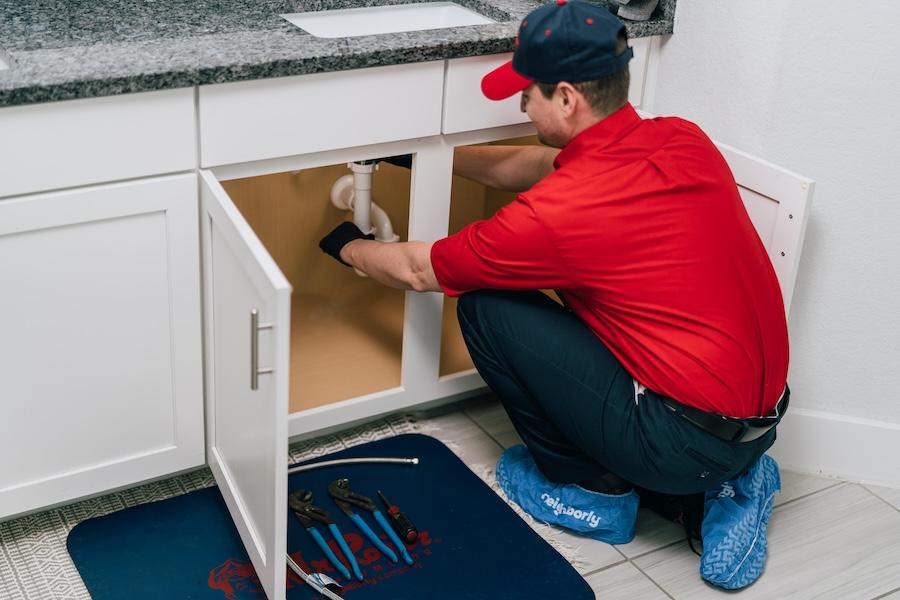
Copper became the dominant residential pipe material after World War II. It was durable and corrosion-resistant compared to older galvanized steel. It's easy enough to work with using the tools of the era. By the 1960s and 70s, it was the default choice for water supply lines across most of the country.
PVC arrived around the same time but carved out a different role. Builders and plumbers in Lewisville, TX adopted it primarily for drain, waste, and vent lines because it resists chemical corrosion and costs less than copper. It wasn't suitable for hot water lines, but for everything it could handle, it worked well and required minimal maintenance.
PEX entered the residential market in the 1980s and grew rapidly from the 1990s onward. Its flexibility, freeze resistance, and low installation cost made it attractive for new construction and retrofits. Today it's the standard choice in most new builds, though millions of homes still run entirely on copper or PVC.
Copper holds up well under pressure and temperature extremes. A properly installed copper system can last 50 years or more, which is why so many older homes still have original copper lines running without problems. It doesn't leach chemicals into drinking water and handles both hot and cold supply lines without degrading.
The limitations show up in specific conditions. Copper corrodes when exposed to highly acidic water, which is a real issue in some regions with naturally low pH levels. Pinhole leaks develop over years of exposure, and when they do, they're not always obvious until water damage has already spread inside a wall. Copper also expands and contracts with temperature changes, which can loosen fittings in systems that run through unconditioned spaces.
Repair costs for copper run higher than for the other two materials. Soldering joints requires a licensed plumber with the right equipment, and replacement sections aren't cheap. A single pipe repair on a copper system typically costs more in parts and labor than a comparable fix on PVC or PEX.
PVC is one of the most durable drain line materials available. It doesn't rust, doesn't corrode, and resists most household chemicals. A PVC drain system installed correctly will likely outlast the rest of the plumbing in the house. It's rigid, which makes it predictable and easy to inspect visually for cracks or joint separation.
However, PVC can't carry hot water supply lines. Sustained heat above 140°F warps the pipe and degrades the material. That disqualifies it from water heater connections and most hot supply runs. It's also brittle in cold temperatures, so pipes installed in unheated crawl spaces or exterior walls can crack during a hard freeze.
Repairing PVC is among the simpler jobs in residential plumbing. Cutting out a damaged section and gluing in a replacement takes basic tools and standard fittings available at any hardware store. A plumbing repair service call for PVC is usually shorter and less expensive than one for copper, partly because no soldering is involved, and fittings connect with solvent cement.
PEX bends around corners without fittings, runs from a central manifold to individual fixtures, and resists freezing better than either copper or PVC. When a PEX pipe freezes, it expands rather than splitting, which reduces the risk of a catastrophic burst. Those properties alone pushed it to the front of the line for new construction.
Installation speed is a serious factor as well. A plumber can run PEX through a house in a fraction of the time required for copper. Fewer fittings means fewer potential leak points, and the connections don't require a torch or solvent. That simplicity translates directly to lower labor costs on new installs and repairs.
PEX degrades under UV exposure, so it can't be used outdoors or in spaces with direct sunlight. Some early fittings, particularly those made from certain brass alloys, had dezincification problems that led to recalls and class action settlements. It also can't be recycled as easily as copper, which matters less in a repair context but is worth knowing for full replacements.
The repair process varies depending on which material you're working with:
Material availability affects costs, too. Copper prices fluctuate with commodity markets and have risen sharply over the past decade. PVC fittings are cheap and widely stocked. PEX fittings are moderately priced and universally available at plumbing supply houses and home improvement stores.
One factor that catches homeowners off guard is that labor rates don't drop just because the material is easier to work with. A plumber still charges for drive time, diagnostics, and access work, like opening walls or crawling under a house. The material affects total cost, but it's not the only variable.
Most homes have more than one pipe material. The problems arise when you connect dissimilar metals directly, particularly copper and galvanized steel. Without a dielectric union between them, galvanic corrosion accelerates at the joint and degrades both pipes faster than they would fail on their own.
Connecting PEX to copper is common and safe when done with the right transition fittings. These connections show up constantly in partial replumbing jobs where a homeowner or plumber replaces a damaged copper section with PEX for cost reasons. The fittings are rated for exactly this purpose and hold up reliably under normal pressure.
It's important to avoid connecting copper directly to galvanized steel, using the wrong solvent cement for the pipe type, or mixing PEX brands with incompatible fittings. Each of those shortcuts creates failures.
So, which pipe material is best? The right answer for your home depends on what's already in your walls and what the repair requires. Mr. Rooter Plumbing works with all three materials and can assess what you have, what's failing, and what the repair will cost before work begins. Contact us to schedule a service call and get answers from a plumber who knows your local water conditions and building codes.

A garbage disposal leaking from the base has already failed internally, and no…
Read More+
Kitchen drains handle more than most people realize. The buildup from grease, food, and soap…
Read More+
Most homeowners have no framework for recognizing underground gas line damage until conditions have already…
Read More+
Stepping onto a warm patch of floor on a cold morning might seem like a…
Read More+