Menu
Call This Sunday to Get $50 Off
Do You Need a Plumber in Dallas, TX? Call us Now to Get $50 OFF
4.8 / 5 Ratings based on 1384 reviews Great Plumbers, Great Reviews

Call This Sunday to Get $50 Off


Kitchen drains handle more than most people realize. The buildup from grease, food, and soap residue accumulates faster in a busy household. When the water starts draining slowly, the instinct is to grab a chemical drain cleaner and hope for the best. The problem is that those products are far harder on your pipes than the packaging suggests, and they rarely take care of what's causing the clog. Handling a kitchen drain problem safely is important because the wrong step can turn a small clog into a damaged pipe. When you need a dependable plumber in Dallas, Texas, call Mr. Rooter Plumbing. Our team provides drain cleaning the right way, without the shortcuts that create bigger problems down the road. ?
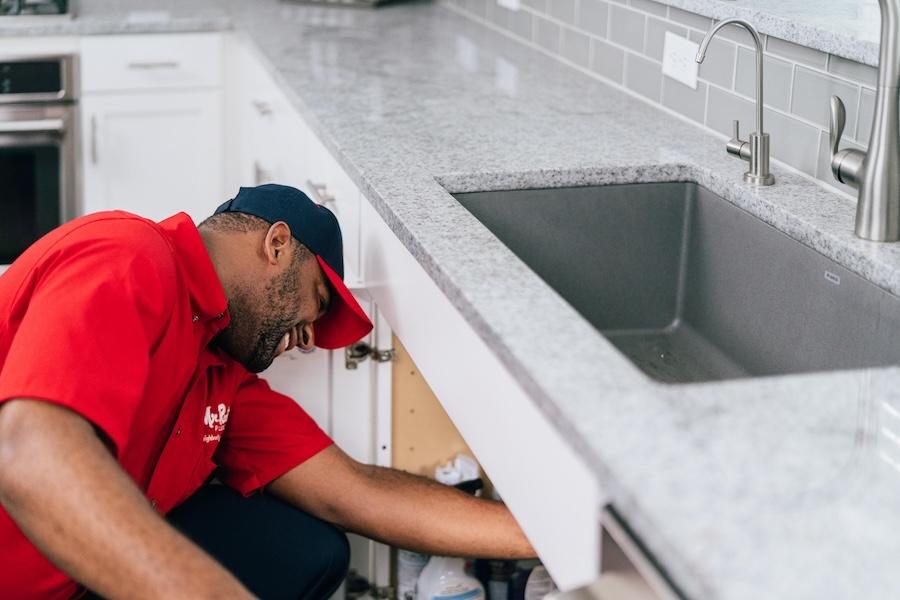
Grease is the most destructive thing going down your kitchen drain. Hot grease pours down the drain as a liquid, cools within the first few feet of pipe, and solidifies along the interior walls. Each time you cook and rinse, another layer builds on top of the last one. The pipe diameter narrows incrementally until water can barely pass through.
Food accelerates the problem because it catches on the grease coating and anchors there. Soap residue binds to both, creating a dense, sticky mass that doesn't flush out with hot water. Coffee grounds are also problematic because they pack tightly into existing buildup.
The buildup process is slow enough that most homeowners don't notice it until the drain is already severely restricted. By then, the clog is usually deeper in the line, sometimes at the P-trap or further into the branch drain.
The active ingredients in most chemical drain cleaners are either lye-based or sulfuric acid. Both work by generating heat through a chemical reaction that breaks down organic material. The heat doesn't stay concentrated on the clog, though. It transfers to the pipe walls, and in older homes with PVC or deteriorating cast iron, the thermal stress weakens the material with repeated use.
Lye-based cleaners are damaging to PVC because the prolonged chemical exposure softens the plastic. Acidic cleaners corrode metal pipes and can degrade the rubber gaskets at joints. Neither type does anything to remove the residue coating the pipe walls. They punch a temporary hole through the clog, and the remaining material closes back in within days or weeks.
There's also a safety issue. If a chemical cleaner doesn't clear the clog and you call a professional plumber afterward, the standing water in the drain contains that chemical. It creates a serious hazard for the technician and complicates the repair. ?
If the drain is slow but not completely blocked, there are a few methods worth trying before scheduling a plumbing repair service. Start with steaming hot water poured in stages with a minute between each pour. This can work well on grease buildup that hasn't hardened completely. If the water doesn't move the clog, try this combination:
A cup plunger works on kitchen drains as long as you create a proper seal over the drain opening. Fill the sink with a few inches of water first so the plunger can generate suction. Use firm, even strokes rather than forcing it.
Stop at this point if none of these methods moves the clog. Reaching further into the line without the right equipment risks pushing the blockage deeper or damaging the P-trap connection. A drain cleaning professional has the tools to address what's further down the line without adding to the problem.?
A qualified plumbing repair service can diagnose where the clog is and what's causing it. That’s important because the treatment for a grease blockage at the P-trap is different from the treatment for a clog at the branch line or the main stack.
The first step is usually a visual inspection of the drain opening and the cabinet under the sink to check for signs of leaking, corrosion, or improper pipe configuration. From there, a technician uses a drain snake or inspection camera to locate the blockage precisely. The camera feed shows where the clog is, what it's made of, and whether the pipe wall behind it is intact.
If the blockage extends past the branch drain into the main line, it changes the scope of the repair. A single kitchen drain backing up repeatedly can indicate a problem in the shared drain line that serves multiple fixtures. A thorough diagnosis catches that before work begins.?
Professional drain cleaning removes blockages mechanically and flushes the pipe walls clean. Hydro jetting is one of the most effective methods available. It pushes water through the line at pressures up to 4,000 PSI. The pressure scours grease, scale, and debris from the interior walls rather than displacing them further down the line.
A motorized drain snake reaches deeper into the line than any consumer-grade tool and cuts through compacted blockages. The technician controls the direction and pressure of the snake, which matters when navigating pipe bends without creating a new problem at a joint or elbow.
The difference is in what gets left behind. DIY methods clear the path temporarily. Professional drain cleaning restores the pipe to close to its original flow capacity and removes the buildup that would create the next clog.
Reaching for chemical cleaners accelerates pipe wear without solving the problem. Simple mechanical methods work on minor clogs, but anything deeper in the line needs professional equipment and a proper diagnosis. Mr. Rooter Plumbing provides drain cleaning and plumbing repair service in Dallas with licensed technicians who diagnose the problem before starting work. If your kitchen drain is running slowly or backing up, give us a call and schedule an appointment.
Kitchen drains handle more than most people realize. The buildup from grease, food, and soap…
Read More+
Most homeowners have no framework for recognizing underground gas line damage until conditions have already…
Read More+
Stepping onto a warm patch of floor on a cold morning might seem like a…
Read More+
Underground pipes spend decades under pressure, shifting soil, root systems, and corrosive conditions that never…
Read More+